
Quantum for Business and Leadership (QBL)
CPDQuantum for Business and Leadership (QBL)
In collaboration with Neurossance, this course is aimed at business executives, policy makers, management, and entrepreneurs, who need to know what emerging quantum tech will (and will not) be able to do for them and their sectors. It gives leaders the tools to be able to critically assess and implement quantum technologies.
6 Days
Duration
Live Online
Sessions
Group Based
Format
Enrollment
Get in Touch for Details
This program can be customized based on specific needs. Flexible delivery options available for corporate teams, government agencies, and institutions. We can craft tailored in-person courses to suit your organizational needs.
Enroll NowTalk to an Advisor- Interactive Lectures
- Live Instructor led sessions
- Real-world case studies
- Post-training support opportunities
Accredited & Recognized By

Program Highlights
Why Quantum? Why now?
Engage confidently with technical experts
Evaluate emerging opportunities and risks
Distinguish genuine innovation from hype
Understand realistic development timelines
Make informed strategic decisions
How to position organisations in a rapidly evolving landscape
Quantum Technologies are Rapidly Moving
From Theoretical Research to Real-World Impact.
Quantum technologies are rapidly moving from theoretical research to real-world impact. Yet a critical knowledge gap remains. Traditional quantum education is often highly mathematical, making it inaccessible to most professionals. At the same time, many business-focussed programmes reduce quantum tech to buzzwords and speculative promises, providing little understanding of the underlying mechanisms. This program is a deep dive into Quantum and Deep Tech for Business & Leadership, with;
- CPD-accredited Certificate of Completion
- Delivered by internationally recognised quantum experts
- Practical industry-focused perspectives
- Frameworks for evaluating quantum opportunities and risks
- Preparation for future technological disruption and innovation
- Real-world use cases and strategic insights
- Opportunities to discuss organisation-specific challenges
Drawing on advances in visual and conceptual approaches to quantum theory, we make complex ideas accessible without sacrificing rigour. Rather than treating quantum as a “black box”, we provide participants with a meaningful understanding of how and why these technologies work.
“Build the ability to evaluate opportunities, risks, and investment pathways within organisational and policy contexts.”
— Neurossance Team
Program Description
Everything at a Glance
Who Should Attend
- Valuable for — professionals responsible for strategic decision-making who require an informed understanding of emerging technologies without deep technical expertise.
- Technology and product leaders
- Policymakers and government stakeholders
- Business leaders and senior executives
- Innovation and transformation managers
- Entrepreneurs and startup founders
- Consultants and strategic advisors
- Investors and venture capital professionals
What Will You Learn?
- Quantum for Business: — Develop a clear and structured understanding of the principles underlying quantum technologies and their applications in business and professional contexts.
- Applied Outcomes — Industry Impact: — Understand how quantum technologies may influence sectors.
- Strategic Leadership: — Build the ability to evaluate opportunities, risks, and investment pathways within organizational and policy contexts.
Why This Course
- Our unique methodology, developed at University of Oxford, is based on Three-Tier Learning Outcomes —
- Conceptual Outcomes — Quantum Literacy
- Strategic Outcomes — Leadership & Decision-Making
- Applied Outcomes — Industry Impact
Course Structure
Why QBL?
Quantum for Business and Leadership – QBL is a high-impact executive upskilling program designed for leaders, decision-makers, and professionals seeking to understand the strategic implications of quantum technologies. As quantum computing and related technologies move from scientific research to commercial and industrial deployment, organisations face both unprecedented opportunities and significant challenges. Leaders must be equipped to navigate both the opportunities and the risks they present. Unlike many existing programmes—which are either highly technical or overly simplified—QBL offers a balanced, rigorous, and accessible learning experience. Participants gain an intuitive understanding of core quantum concepts while developing the strategic insight needed to critically evaluate emerging technologies and make informed decisions within their organizations. The program is delivered by internationally recognised experts in quantum science, quantum computing, cybersecurity, and emerging technologies.
Key technologies
Current and emerging use cases
Myths, hypes, and practical challenges
Scaling and feasibility

Meet Your Trainers
Course Instructors
Learn from experts.

Prof Bob Coecke
Lecturer
Prof Coecke is Distinguished Visiting Research Chair at the Perimeter Institute for Theoretical Physics, Fellow at Wolfson College Oxford, and Visiting Fellow at the Computer Science Department and the Mathematical Institute of Oxford University. Previously he was Professor of Quantum Foundations, Logics and Structures at the Department of Computer Science at Oxford University, where he was 20 years. During this time, he co-founded and led a multi-disciplinary Quantum Group that grew to 50 members and has supervised 70 PhD students. He then moved to industry, serving as Chief Scientist at Quantinuum, where he was the inventor of Quantum NLP & Compositional Intelligence. He continues to supervise students at Oxford and elsewhere, and still teaches at Oxford’s Mathematical Institute. He pioneered Categorical Quantum Mechanics (now included in AMS’s MSC2020 classification), ZX-calculus, DisCoCat natural language meaning, Quantum Natural Language Processing, and DisCoCirc natural language meaning. For more information https://www.cs.ox.ac.uk/people/bob.coecke/
Connect on LinkedIn
Prof Dusko Pavlovic
Lecturer
Dusko Pavlovic studied Mathematics at Utrecht, and had positions at McGill, and at Imperial College. He left academia 1999-2009, to work at Kestrel Institute at Palo Alto. He was a Visiting Professor at Oxford University 2008-2012, and a Professor of Information Security at Royal Holloway University of London 2010-2013. Since 2014 he has lead ASECOLab (Adaptive Security and Economics Lab), the designated research institute for Cyber Security and Information Assurance at University of Hawaiʻi at Mānoa. Through years, his publications spanned a wide area of research interests, from mathematics (graphs, categories) and quantum information theory (toy models, graphic formalisms), through theoretical computer science (semantics, symbolic computation) and software engineering (behavioral specifications, adaptation), to security and privacy (protocols, trust, strategies) and network computation (concept analysis). For more information https://dusko.org

Prof Aleks Kissinger
Lecturer
Aleks Kissinger is a Professor of Quantum Computing at the University of Oxford. He has been working in quantum computing since 2007, is an expert in designing software to run on quantum computers, and has authored dozens of papers and two textbooks on the subject. He has taught quantum computing to learners at all levels from high school to graduate school and has supervised over 20 PhD students in quantum computing. For more information https://www.cs.ox.ac.uk/people/aleks.kissinger/

Prof Matty Hoban
Lecturer
Matty Hoban is a Professor of Quantum Computing at the University of Oxford, Fellow at St Hilda. Prior to his position, he was a senior research scientist in quantum cryptography at Quantinuum, a multi-national quantum computing company. Before working in industry he held various researcher and lecturer positions at the University of Oxford, University of Edinburgh, ICFO-Institute of Photonic Sciences (Barcelona) and the University of London. He has an undergraduate degree from Imperial College London and his PhD in quantum computing is from UCL. Dr Hoban’s research predominantly focusses on quantum information and quantum foundations, and their intersection. He is interested in how quantum information is fundamentally different from its non-quantum counterpart and how this can be used in information processing tasks, especially those relevant to cryptography and the verification of quantum devices. For more information https://www.st-hildas.ox.ac.uk/people/matty-hoban
Connect on LinkedIn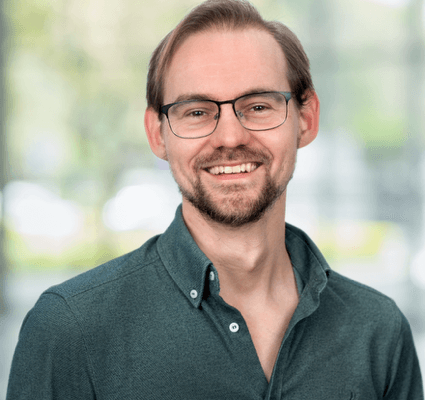
Prof John van de Wetering
Lecturer
John van de Wetering is an assistant professor at the Theoretical Computer Science group of the Informatics Institute of the University of Amsterdam, working together with the QuSoft research center. His research focuses on two areas: 1. The usage of diagrammatic techniques in quantum computation. He is the co-creator of the open source optimising quantum compiler PyZX, a Python tool for using the ZX-calculus on quantum circuits. 2. The nature of quantum mechanics through algebraic and compositional methods. For more information https://vdwetering.name
Connect on LinkedIn
Dr Lia Yeh
Lecturer
Lia Yeh is Dowling Fellow Research Associate in the Department of Computer Science and Technology at the University of Cambridge, investigating the intersection of quantum computer architectures, quantum error correction, and quantum algorithms. She completed her PhD in Computer Science at the University of Oxford on the Clarendon Scholarship and the Google PhD Fellowship, during which she worked as a Research Scientist at Quantinuum. Her research objective is to address each layer of the quantum computing stack, from hardware systems to applications, through co-designing with quantum graphical languages, particularly the ZX-calculus. She is especially interested in constructions for fault-tolerant gate sets, quantum error correcting codes, dynamical quantum programs, and fermionic, bosonic, and higher-dimensional quantum systems. She is also active in quantum education: teaching high school students and educators, open-source software and hackathons, co-founding the Quantum Science and Engineering Education Conference, and establishing the not-for-profit Quantum Universal Education.
Connect on LinkedIn
Dr Selma Coecke
Educational Lead
Selma Coecke is a developmental cognitive scientist with a longstanding interest in multidisciplinary approaches to education. Following her first PhD in education sciences, she undertook a sabbatical at the University of Zurich in 2012, where she collaborated with physicists from CERN to investigate the implications of quantum theory for education and cognition. Subsequently, she joined the University of Oxford as an academic visitor at Quantum Group and pursued a second MSc in Educational Neuroscience at Birkbeck, University of London. She then secured ESRC funding for her second PhD in the Department of Psychology and Human Development at the Institute of Education, University College London. She also teaches the ‘Psychology and Learning’ module at master’s level at the School of Education, Communication & Society, Kings’ College, London. Dr Dündar-Coecke specializes in translating advanced and emerging scientific research into practical educational innovation, early skills and workforce development, knowledge transfer, the adoption of emerging technologies, and strategies for talent cultivation. For more information https://neurossance.com/about-us/
Connect on LinkedInUpcoming Cohort
Enroll in the Next Cohort
Starting 28 September 2026, 17:00 – 19:00 (GMT)
Next Cohort - September 2026
Online Cohort (6 Consecutive Days)
- Kick-Off: 28 September 2026, 17:00 – 19:00 (GMT)
- 29 September 2026, 17:00 – 19:00 (GMT)
- 30 September 2026, 17:00 – 19:00 (GMT)
- 1 October 2026, 17:00 – 19:00 (GMT)
- 2 October 2026, 17:00 – 19:00 (GMT)
- 3 October 2026, 17:00 – 19:00 (GMT)
Other AI Trainings
Discover our comprehensive range of AI training programs designed for leaders, professionals, and organizations.

Quantum Cognition
Uncover why classical probability was originally assumed to govern human decision-making—and where it breaks down.

AI Superpowered HR Leaders
This is an intensive professional development program designed to transform HR professionals from observers of AI adoption to strategic leaders of organizational transformation. This isn't a course about using ChatGPT or automating admin tasks.

AI Superpowered Mentors & Coaches
This program is designed to equip coaching professionals with AI-driven strategies, ethical considerations, and hands-on experience in integrating AI into their practice. By bridging traditional coaching methodologies with AI-enabled capabilities, the program ensures professionals remain effective and future-ready.

Customized Board Members Training
Board members who understand AI's strategic implications make better governance decisions, ask sharper questions, and guide their organizations toward sustainable competitive advantage. Every session is built around your organization's unique challenges and strategic priorities.

AI Governance
A comprehensive 3-day program designed to equip leaders and governance teams with the structures, decision routes and evidence practices required to govern AI across the organization.

AI for Startups: Strategic Implementation and Growth
This executive training program empowers startup founders and teams with the knowledge and skills needed to integrate AI strategically into their businesses, leveraging AI for growth, cost efficiency, and competitive advantage.
Quantum Cognition
Uncover why classical probability was originally assumed to govern human decision-making—and where it breaks down.
AI Superpowered HR Leaders
This is an intensive professional development program designed to transform HR professionals from observers of AI adoption to strategic leaders of organizational transformation. This isn't a course about using ChatGPT or automating admin tasks.
AI Superpowered Mentors & Coaches
This program is designed to equip coaching professionals with AI-driven strategies, ethical considerations, and hands-on experience in integrating AI into their practice. By bridging traditional coaching methodologies with AI-enabled capabilities, the program ensures professionals remain effective and future-ready.
Customized Board Members Training
Board members who understand AI's strategic implications make better governance decisions, ask sharper questions, and guide their organizations toward sustainable competitive advantage. Every session is built around your organization's unique challenges and strategic priorities.
AI Governance
A comprehensive 3-day program designed to equip leaders and governance teams with the structures, decision routes and evidence practices required to govern AI across the organization.
AI for Startups: Strategic Implementation and Growth
This executive training program empowers startup founders and teams with the knowledge and skills needed to integrate AI strategically into their businesses, leveraging AI for growth, cost efficiency, and competitive advantage.
Quantum Cognition
Uncover why classical probability was originally assumed to govern human decision-making—and where it breaks down.
AI Superpowered HR Leaders
This is an intensive professional development program designed to transform HR professionals from observers of AI adoption to strategic leaders of organizational transformation. This isn't a course about using ChatGPT or automating admin tasks.
AI Superpowered Mentors & Coaches
This program is designed to equip coaching professionals with AI-driven strategies, ethical considerations, and hands-on experience in integrating AI into their practice. By bridging traditional coaching methodologies with AI-enabled capabilities, the program ensures professionals remain effective and future-ready.
Customized Board Members Training
Board members who understand AI's strategic implications make better governance decisions, ask sharper questions, and guide their organizations toward sustainable competitive advantage. Every session is built around your organization's unique challenges and strategic priorities.
AI Governance
A comprehensive 3-day program designed to equip leaders and governance teams with the structures, decision routes and evidence practices required to govern AI across the organization.
AI for Startups: Strategic Implementation and Growth
This executive training program empowers startup founders and teams with the knowledge and skills needed to integrate AI strategically into their businesses, leveraging AI for growth, cost efficiency, and competitive advantage.
Quantum Cognition
Uncover why classical probability was originally assumed to govern human decision-making—and where it breaks down.
AI Superpowered HR Leaders
This is an intensive professional development program designed to transform HR professionals from observers of AI adoption to strategic leaders of organizational transformation. This isn't a course about using ChatGPT or automating admin tasks.
AI Superpowered Mentors & Coaches
This program is designed to equip coaching professionals with AI-driven strategies, ethical considerations, and hands-on experience in integrating AI into their practice. By bridging traditional coaching methodologies with AI-enabled capabilities, the program ensures professionals remain effective and future-ready.
Customized Board Members Training
Board members who understand AI's strategic implications make better governance decisions, ask sharper questions, and guide their organizations toward sustainable competitive advantage. Every session is built around your organization's unique challenges and strategic priorities.
AI Governance
A comprehensive 3-day program designed to equip leaders and governance teams with the structures, decision routes and evidence practices required to govern AI across the organization.
AI for Startups: Strategic Implementation and Growth
This executive training program empowers startup founders and teams with the knowledge and skills needed to integrate AI strategically into their businesses, leveraging AI for growth, cost efficiency, and competitive advantage.
Our Tailored Services
Our Tailored Services & According to Your Needs
Beyond training — we provide a complete ecosystem of AI enablement services tailored to your organization.
Custom AI Use Case Development
Every organization has unique operational challenges, customer expectations, and workflows — which is why AI implementation should never follow a one-size-fits-all approach. As WSI, we focus on identifying practical, industry-specific AI opportunities that align with your business objectives and existing processes. Through real-world scenarios and company-specific data, we help transform AI from a theoretical concept into measurable business value.
- Industry-specific AI application scenarios
- Practical AI model development using real company data
C-Level & Executive Briefings
AI adoption requires strategic alignment at the leadership level before operational execution begins. These executive-focused briefings are designed to help decision-makers understand the business impact, risks, opportunities, and competitive implications of AI technologies. Sessions are tailored to your organization's priorities, combining market insights, strategic recommendations, and practical implementation perspectives.
- Strategic AI sessions tailored for executives
- Custom reports and AI-driven business insights
- Focused content on privacy, compliance, and competitive advantage
In-House AI Pilot Program Design
Successful AI transformation often begins with a focused pilot initiative that validates value before large-scale investment. This service supports organizations in designing and developing internal AI pilot programs that are practical, measurable, and aligned with business goals. From proof-of-concept planning to implementation guidance, the process is designed to reduce uncertainty and accelerate organizational learning.
- AI pilot project development & proof of concept
- Hands-on assistance in AI implementation
- Analysis and roadmap for scaling AI solutions
Custom AI Use Case Development
Every organization has unique operational challenges, customer expectations, and workflows — which is why AI implementation should never follow a one-size-fits-all approach. As WSI, we focus on identifying practical, industry-specific AI opportunities that align with your business objectives and existing processes. Through real-world scenarios and company-specific data, we help transform AI from a theoretical concept into measurable business value.
- Industry-specific AI application scenarios
- Practical AI model development using real company data
Ready to Transform?